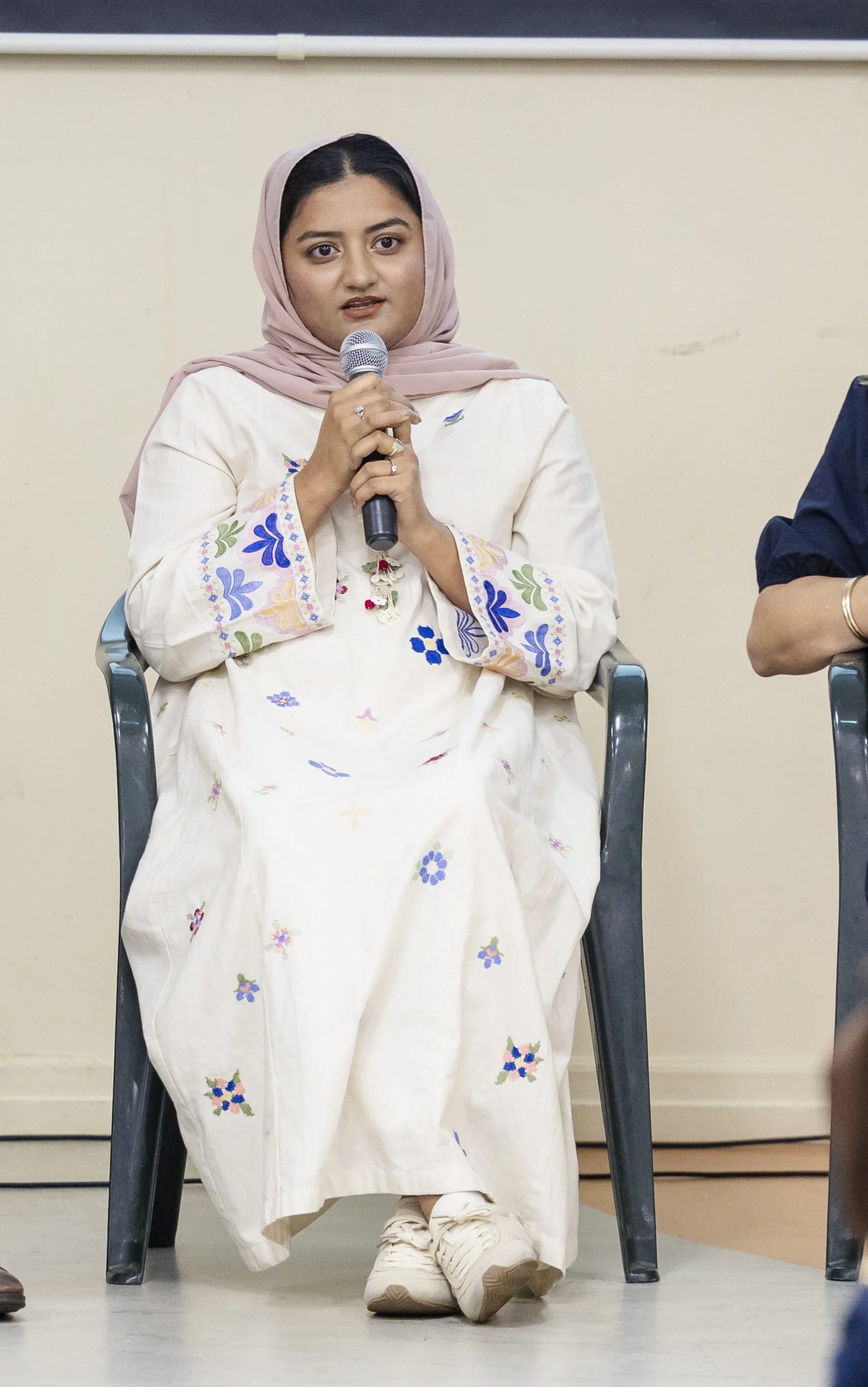
Meet Rabia
Master of Counselling and Psychotherapy | ACAP
-
I am currently completing a Master’s degree in counselling, building on my previous academic background in clinical psychology. I am deeply interested in mental health, women’s empowerment, social justice and creating systems that are more inclusive and responsive to people’s lived experiences.
My journey has taught me the importance of resilience, education and having opportunities that allow people to recognise their own strengths and potential. I am particularly passionate about supporting women and people from diverse backgrounds who may face social, cultural or systemic barriers to education, employment and wellbeing. Through my professional and community work, I have had opportunities to contribute to programs, advocacy and conversations that aim to create meaningful change.
What is important to me is using both my education and lived experience in ways that benefit others. I believe that education is not only about gaining a qualification; it can also create confidence, independence and the ability to contribute to your community.
I would like people to know that I value perseverance, compassion and purpose. My experiences have shaped my commitment to continuing to learn, advocating for others and working towards a future where people have greater opportunities to thrive.
-
My educational journey has been shaped by migration, family responsibilities, financial challenges and the experience of rebuilding my professional pathway in a new country.
I grew up in a rural town in Pakistan, where educational and professional opportunities for women were not always easily accessible. Despite these challenges, I pursued higher education and completed postgraduate studies in clinical psychology. When I moved to Australia, I hoped to continue building on that education and experience, but I encountered significant barriers to having my overseas qualifications recognised.
This meant that I had to reconsider my professional pathway and return to university in Australia, including repeating areas of study I had previously completed. As a permanent resident who was not eligible for government-supported student loans at the time, continuing my education also required a significant financial commitment while balancing family, work and other responsibilities.
Although this journey has not been straightforward, it has strengthened my determination to continue learning and contributing to my community. It has also given me a deeper understanding of the challenges that migrants, particularly women with overseas qualifications, can face when trying to rebuild their careers. These experiences have shaped not only my education, but also my commitment to advocacy, equity and supporting others to have their skills and potential recognised.
-
I feel I am progressing well academically and professionally. My Master’s degree in counselling is strengthening my practical therapeutic skills and expanding on my previous background in clinical psychology. I have particularly developed my skills in therapeutic relationships, trauma-informed practice, psychodynamic approaches, reflective practice and working effectively with clients’ emotions.
My studies have also increased my confidence in integrating theory, research and practical counselling skills. Alongside my professional experience, I am developing a clearer sense of the kind of practitioner I want to become.
My long-term goal is to establish my own counselling practice as a business, where I can provide compassionate, evidence-informed and culturally responsive support to individuals and families. I see my current education and professional development as an important foundation for making this goal a reality.
-
I am especially enjoying learning about the therapeutic relationship, trauma-informed practice, psychodynamic approaches and neuroscience in counselling. I find it fascinating to understand how people’s past experiences, relationships and emotional patterns can influence their present wellbeing.
I also enjoy developing practical counselling skills, particularly empathic listening, emotional attunement and reflective practice, and learning how to stay present with clients during difficult emotions. These areas are helping me become more thoughtful and confident in my practice.
I am particularly interested in how counselling can be culturally responsive and adapted to each person’s individual experiences. This is important to me because I hope to build my own counselling practice in the future and provide compassionate, evidence-informed support to people from diverse backgrounds.
-
I am working towards completing my Master’s degree in counselling and building a career that combines mental health support, community empowerment and social impact.
One of my main goals is to establish my own counselling practice, providing trauma-informed, culturally responsive and evidence-informed support to people from diverse backgrounds.
I also hope to develop a business that supports people who have faced barriers to gaining their driver’s licence, particularly women from marginalised and culturally diverse communities. Having a driver’s licence can significantly improve independence, employment opportunities, access to education and participation in community life.
Ultimately, I want to build services that respond to practical as well as emotional barriers, helping people gain greater confidence, independence and opportunity in their lives.
-
I am most proud of continuing to rebuild my education and career in Australia despite the barriers I have faced along the way.
Having previously completed postgraduate studies in clinical psychology overseas, starting again in a new country required persistence, significant financial commitment and the willingness to create a new professional pathway.
I am proud that I have continued my Master’s degree in counselling while also developing professionally, contributing to community initiatives and advocating for women and people from diverse backgrounds.
More than any single achievement, I am proud that I have turned difficult experiences into motivation to create opportunities for myself and others. My goal now is to use my education, professional experience and community knowledge to build services that support people’s wellbeing, independence and participation in their communities.
-
One of the most difficult periods in my journey came after my application to have my overseas qualifications recognised by AHPRA was rejected. After investing significant time, money and hope into the process, the rejection placed me under severe financial and emotional pressure, and I experienced suicidal thoughts.
With support and determination, I found a new pathway and continued my education. That experience strengthened my resilience and deepened my commitment to advocating for people who face systemic, financial and professional barriers.
-
Outside my studies, I enjoy playing badminton and being involved in community work, advocacy and initiatives that support women, mental health and social inclusion.
I volunteer to help women complete their supervised driving hours, particularly those from migrant and marginalised communities. I am passionate about creating opportunities that help women become more independent, confident and connected.
-
The Scholarship has made it possible for me to continue my studies with greater financial stability and confidence. It has reduced some of the pressure of paying for my education while balancing work, family and other responsibilities.
More importantly, it has allowed me to stay focused on completing my Master’s degree in counselling and preparing for my future goals. The support has strengthened my confidence and helped me continue working towards establishing my own counselling practice and developing community-focused services that support women’s independence, wellbeing and access to opportunities.
-
Thank you for investing in students like me and for believing in the power of education. Your support has helped reduce financial pressure and has given me greater confidence to continue working towards my goals.
Your contribution goes beyond helping with study costs; it creates opportunities, strengthens independence and allows people to build a better future for themselves and their communities.
I am deeply grateful for the support I have received and hope to use my education and future work to create the same sense of opportunity for others.
-
“Alone we can do so little; together we can do so much.”